
GOT MOLD ?
Don't Take Chances! Call the Top Mold
Remediation Company in Leawood and get cleaned up FAST!



Why Choose Us?
- Certified Pros
- Available 24/7/365
- Rapid Response
- Fully Licensed And Insured
- We Work With Your Insurance Company
Call Now (913) 827-1966
Leawood Mold Remediation Services
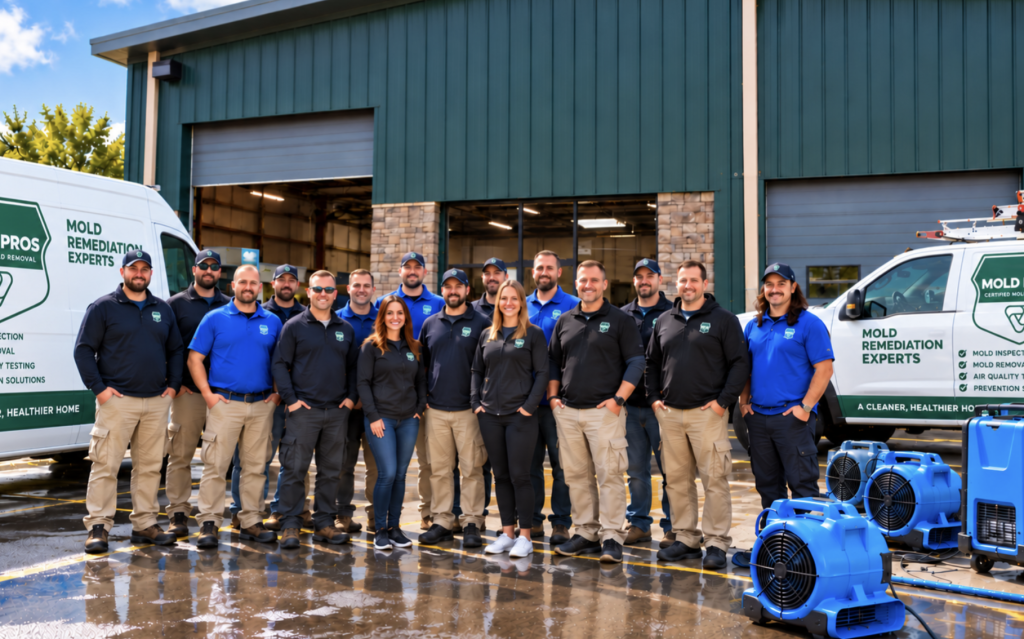
Our mold remediation team helps home and business owners address mold after leaks, storms, humidity, and hidden moisture. We serve properties across the local area and nearby communities, including homes with basements, crawl spaces, and finished lower levels. Our team is IICRC certified, and our business is BBB registered. We focus on locating moisture, controlling the work area, and removing affected materials without creating unnecessary disruption. If you are unsure what you are seeing, our mold warning signs guide can help you decide what to do first.
Why Do Leawood Properties Develop Mold Problems?
- Heavy thunderstorms and runoff: Intense rain can overwhelm drainage near Indian Creek and Tomahawk Creek, sending water toward foundations, lower levels, and wall assemblies.
- Damp basements: Seepage, foundation drainage problems, and elevated groundwater after prolonged rain can keep finished materials wet below grade.
- Crawl space moisture: Exposed soil, missing vapor barriers, and poor drainage can leave joists and subfloors damp for long periods.
- Condensation and indoor humidity: Warm, humid air can collect on cool windows, ducts, pipes, and exterior walls, even when there is no obvious leak.
What’s Included
We provide mold cleanup for residential and commercial properties with visible growth, musty odors, or suspected moisture damage. Service areas may include attics, crawl spaces, basements, walls, floors, and other affected building assemblies. We begin by looking for the moisture source and identifying materials that need cleaning or removal. That source might be a roof leak, plumbing problem, HVAC issue, window leak, or foundation drainage concern. Finding the source matters because mold often returns when damp conditions remain.
Our work may include setting up containment, using HEPA air filtration, cleaning salvageable surfaces, and removing porous materials that cannot be reliably cleaned. Containment means plastic barriers that help keep mold dust from spreading into clean areas. A HEPA air scrubber filters fine particles from the work area while cleanup proceeds. Drywall, carpet, insulation, and some other porous materials may need removal when growth has penetrated them. We keep the process focused on affected areas instead of treating every surface as contaminated.
What’s Not Included
Property owners often need help after a leak, storm, or plumbing failure has already been repaired. We can address the remaining mold-related cleanup and moisture conditions within our service scope. Reconstruction, painting, flooring replacement, major plumbing, roofing, and structural repairs are separate trades unless specifically included in an agreed scope. Our mold removal service page explains containment, cleanup, affected materials, project timing, and other process details in greater depth.
Local moisture conditions that change the inspection
Local properties face several moisture patterns that require attention below and above the finished living space. Late spring and summer storms produce heavy rainfall and rapid runoff across paved areas, roofs, streets, and drainage systems. Properties near Indian Creek or Tomahawk Creek should be reviewed using the exact address rather than assumptions about flood risk. The city, regional authorities, and FEMA provide mapping resources for property-specific floodplain questions. A recent renovation or addition also merits review if materials were enclosed before they fully dried. These observations help connect visible mold with the building condition that allowed it to develop.
Basements and crawl spaces also need a different review than slab-on-grade areas. We look for damp insulation, stained framing, soft drywall, standing water history, and conditions that hold moisture against the structure. In established neighborhoods and newer planned subdivisions, drainage, flashing, HVAC performance, and construction details may differ. These observations help connect visible mold with the building condition that allowed it to develop.
For local stormwater questions, property owners can review information from the city public works department and regional floodplain resources. FEMA’s Flood Map Service Center also provides address-specific mapping. These resources do not replace a building assessment, but they help explain why a lower level may have recurring water concerns. Today, check gutters, downspouts, sump equipment, and visible foundation areas after heavy rain.
Who we serve and what you can expect
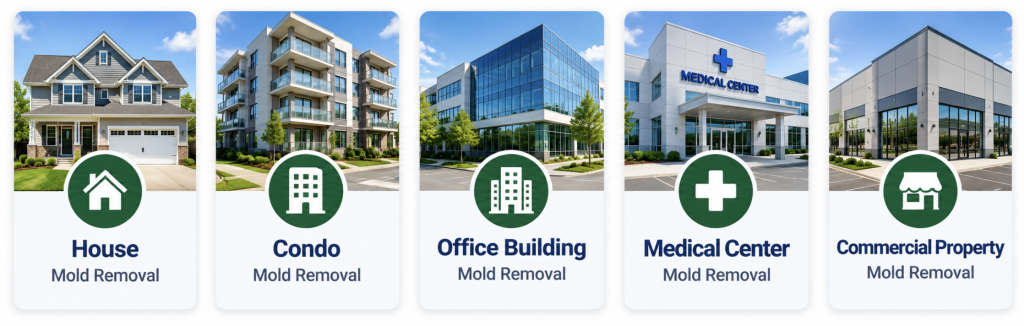
We work with homeowners, landlords, property managers, and commercial property owners. That includes detached homes, apartments, condos, offices, schools, churches, medical facilities, retail properties, and industrial spaces. Work areas are planned around the affected materials and the need to limit dust or debris movement. Occupancy questions depend on the location, scope, airborne dust controls, and the condition of the building. If someone in the property has a health concern, ask a doctor or another qualified health professional for personal guidance.
Our approach is calm and direct because mold problems often appear during an already stressful water event. Do not paint over visible growth or seal damp materials inside a wall. Stop an active water source when it is safe, protect nearby belongings, and avoid disturbing large areas before the condition is reviewed. You can also photograph affected rooms and record when the odor, leak, or staining first appeared. Those details help connect the visible condition with recent storms, repairs, or building use.
Our team is IICRC certified, and our BBB registration provides an additional business credential for local property owners. We also serve nearby Overland Park and Prairie Village when the project location falls within our service area. Our work stays focused on practical moisture control and mold cleanup rather than unsupported claims about health or building conditions. For questions about contractor or construction requirements, review guidance from the regional contractor licensing resource.
Call (913) 827-1966 to discuss what you found and what happened before the mold appeared. We will listen to the moisture history, ask about the affected rooms, and explain what information is useful for the next step. If active water is present, shut off the source when safe and tell us where it is entering. Having photos, the property address, and any leak or repair details nearby will help us understand the situation.
Frequently Asked Questions
Does every property near a creek have flood damage?
No, being near Indian Creek or Tomahawk Creek does not prove that a property has flooded. Flood exposure is property-specific and should be checked with FEMA or regional mapping. Yard slope, drainage paths, foundation height, and past water events also matter. A lower level can have moisture problems from seepage or plumbing even when the property is outside a mapped flood area.
Can mold grow in a basement without standing water?
Yes, mold can develop when humidity, condensation, or slow seepage keeps materials damp. Basements often have cool walls and floors where humid air can collect. A small foundation leak or plumbing leak may wet drywall without leaving a large puddle. Look for musty odors, staining, peeling finishes, damp carpet, or softened wall areas.
Should I clean visible mold myself?
Small surface areas on hard, nonporous materials are often easier to clean than damaged drywall, carpet, or insulation. Avoid disturbing large growth areas or materials that have absorbed water. Do not use paint to cover the condition, because paint does not remove moisture or growth beneath the surface. A larger area, recurring odor, hidden leak, or contaminated porous material calls for a professional assessment.
What should I do after a storm causes basement moisture?
Keep people away from unsafe water and shut off utilities only if it is safe to do so. Move undamaged belongings away from wet areas and photograph the conditions before extensive cleanup. Check whether the water came through a foundation, window, floor drain, sump system, or damaged exterior area. Remove standing water only with equipment that is safe for the conditions, then address damp materials promptly.